


Few symptoms catch women off guard quite like sudden, persistent vaginal itching in their late 30s or 40s. When there is no obvious rash, no new laundry detergent, and standard over-the-counter yeast creams do nothing to calm the irritation, it is easy to feel frustrated or embarrassed.
Having worked as a menopause health coach for decades, helping women navigate midlife hormone shifts, I hear about this symptom far more often than most women realize. Because people rarely talk about it openly, many assume they have a stubborn infection when the real culprit is fluctuating hormones.
Perimenopause vaginal itching is a common, physical response to changing estrogen levels. Understanding why your body is reacting this way helps you rule out infections safely, avoid products that make irritation worse, and build daily habits that restore comfort.
Why Does Perimenopause Cause Vaginal Itching?
During perimenopause, your ovaries do not simply shut down overnight. Instead, estrogen and progesterone rise and fall unpredictably for several years before your periods stop completely. Estrogen does much more than regulate your menstrual cycle; it keeps the tissues of your vulva and vagina thick, elastic, well-hydrated, and rich in healthy blood flow.
When estrogen drops or fluctuates erratically, three physical shifts occur:
- Thinner, drier tissue: Without steady estrogen, the lining of the vaginal walls becomes thinner and produces less natural moisture. Dry tissue creates friction against underwear or during movement, which feels like persistent itching, tightness, or rawness.
- Changes in vaginal pH: Healthy estrogen levels help maintain a slightly acidic environment that supports beneficial bacteria (lactobacilli). As estrogen dips, your vaginal pH rises and becomes more alkaline, leaving delicate skin more vulnerable to irritation and bacterial imbalances.
- Increased sensitivity to everyday products: Because the skin barrier is thinner, soaps, body washes, panty liners, and scented laundry detergents that never bothered you before can suddenly trigger contact dermatitis and itching.
Vaginal discomfort rarely happens in isolation. If you are also noticing lighter sleep, sudden mood shifts, or changes in your cycle timing, read my guide on perimenopause early symptoms to see how these subtle signs connect.
Hormonal Dryness vs. an Infection: How to Tell the Difference
One of the most important steps in managing perimenopause vaginal itching is knowing when dryness is hormonal and when you need a doctor to check for an infection. Because shifting pH levels alter your natural bacterial balance, women in midlife can become more susceptible to both yeast infections and bacterial vaginosis (BV).
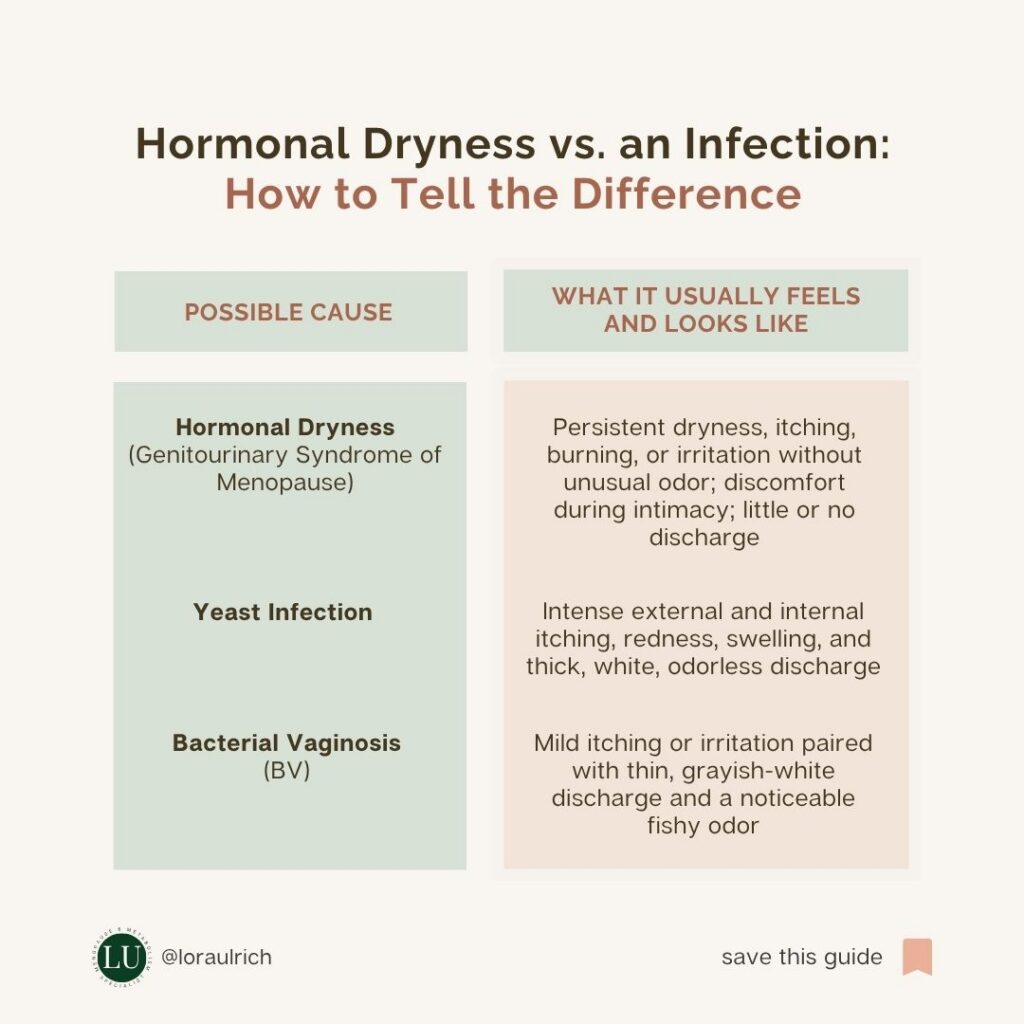
If your itching comes with unusual discharge, strong odor, pain during urination, or visible sores, schedule a visit with your OB/GYN or healthcare provider for a proper swab before trying home remedies. Using an antifungal cream when the underlying issue is hormonal dryness may further irritate already sensitive tissue. If recurring fungal infections have become a pattern for you, read my post on menopause yeast infections to see how low estrogen triggers them and what steps help prevent flare-ups.
Everyday Triggers That Make Perimenopause Vaginal Itching Worse
When vaginal and vulvar tissues are already dry from fluctuating estrogen, small daily habits can accidentally strip away whatever moisture remains:
- Scented soaps and feminine washes: Even gentle-sounding “pH-balanced” washes, bubble baths, and scented wipes disrupt your natural flora and dry out delicate skin.
- Tight synthetic clothing: Yoga pants, shapewear, and nylon underwear trap heat and moisture against the skin, creating friction and encouraging yeast or bacterial overgrowth.
- Over-washing: Washing the vulva multiple times a day or using hot water strips away protective natural oils.
- Chronic dehydration and high-sugar diets: Not drinking enough water can affect moisture levels throughout the body’s mucous membranes, while excess sugar may encourage yeast overgrowth when your vaginal environment is already more vulnerable to imbalance.
Practical Ways to Soothe Perimenopause Vaginal Itching

- Switch to Gentle, Fragrance-Free Hygiene
Clean the external vulvar area once daily using warm water only, or a plain, unscented, soap-free cleanser designed for sensitive skin. Pat the area dry gently with a soft towel instead of rubbing, and skip douches, scented sprays, and dyed toilet paper.
- Wear Breathable Fabrics and Sleep Without Underwear
Choose 100% cotton underwear during the day and avoid tight-fitting bottoms whenever you are relaxing at home. Sleeping without underwear at night allows airflow, keeps the skin cool, and prevents overnight moisture buildup.
- Use Plain Moisturizers and Lubricants
Regular vaginal moisturizers (applied a few times a week, separate from intimacy) help replenish moisture in dry tissues. Look for simple, water-based or hyaluronic acid formulas free of glycerin, parabens, and warming agents, as those additives often cause stinging on sensitive perimenopausal skin.
- Support Hydration and Hormone Balance Through Nutrition
Drink water consistently throughout the day and include healthy fats like olive oil, avocados, walnuts, and ground flaxseeds in your meals to support skin and tissue health. For additional daily lifestyle strategies that ease midlife shifts, explore my guide to natural perimenopause relief.
- Consider Targeted Nutritional Support
While topical habits address immediate comfort, supporting your body’s broader hormonal shifts helps steady the underlying fluctuations. Plant-based phytoestrogens, such as soy and red clover isoflavones, along with calming adaptogens, can help support overall hormone balance and stress resilience during this transition. To learn more about the supplements I commonly recommend for hormone support, visit my guide to perimenopause supplements.
Build a Daily Routine That Supports Your Changing Body
Managing perimenopause vaginal itching often takes both medical guidance and consistent daily habits. While perimenopause vaginal itching can feel frustrating, understanding the hormonal changes behind it allows you to take practical steps that support comfort, vaginal health, and overall well-being.
If you need support with your nutrition, hormonal health, and midlife metabolism, we can build a clear strategy around your unique health history and hormone profile.
Book a Free Discovery Call today to talk through the symptoms you are experiencing and map out clear, realistic steps to feel comfortable in your body again.
FAQs
Can perimenopause cause vaginal itching without discharge?
Yes. Dropping estrogen makes vaginal and vulvar tissue thinner and drier, which irritates the skin and causes itching even when there is no discharge or odor.
How long does perimenopause vaginal itching last?
Because estrogen levels continue to fluctuate throughout perimenopause and remain low after menopause, vaginal dryness and sensitivity do not usually go away on their own. Supporting overall hormone balance through nutrition and daily habits, using gentle personal care and vaginal moisturizers, and asking your doctor about local options can keep you comfortable long-term.
Will over-the-counter hydrocortisone cream help perimenopause itching?
A plain, low-dose over-the-counter hydrocortisone cream may temporarily calm external skin irritation for a few days, but it should not be used long-term or internally, as prolonged steroid use can further thin delicate vulvar skin. Always check with your doctor before applying medicated creams to sensitive areas. Because hydrocortisone only masks surface irritation, talk with your doctor about targeted options like vaginal estrogen cream, which can be very helpful for supporting tissue comfort.
Disclaimer: The information provided in this blog post is for educational and informational purposes only and is not intended as medical advice. Always consult with a qualified healthcare professional regarding any medical conditions, symptoms, diagnosis, or treatment decisions.






+ show Comments
- Hide Comments
add a comment