


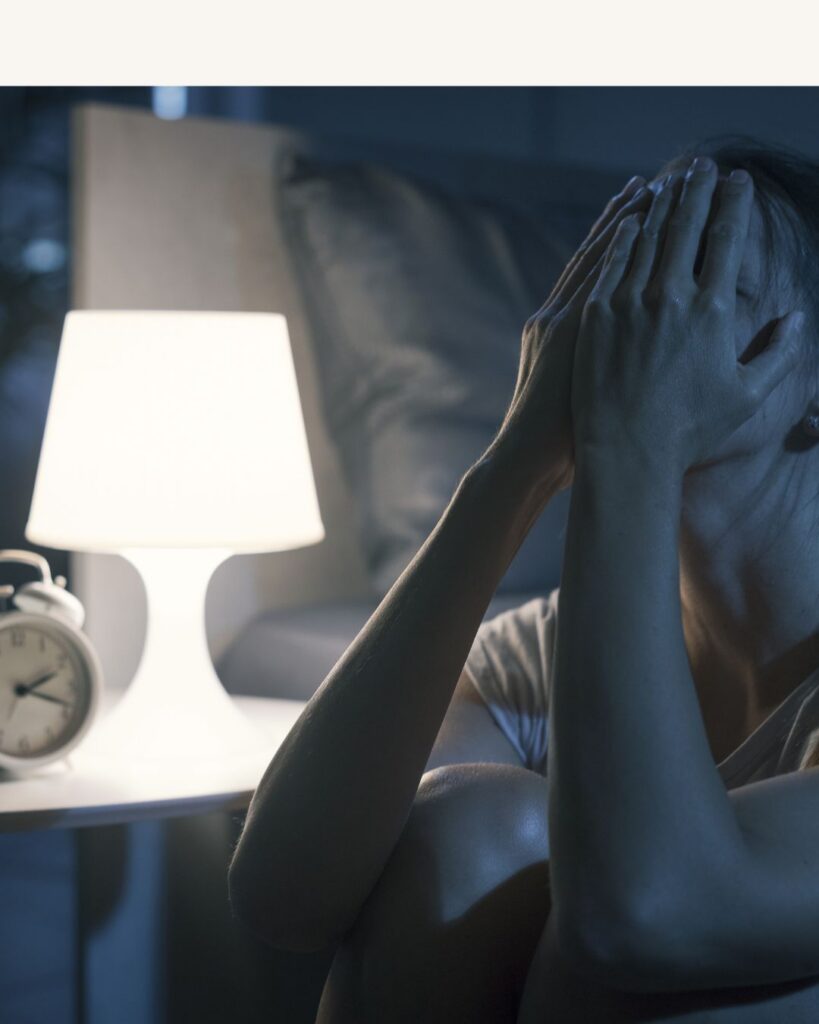
One of the most frustrating parts of midlife for many women in menopause is not sleeping through the night. You go to bed exhausted, but your body wakes you up for no obvious reason.
Poor sleep ruins the rest of your day. Your mood drops, your brain feels foggy, your energy crashes, and you start reaching for sugar just to get through the afternoon.
To fix your sleep, it helps to understand what is happening inside your body. These wake-ups aren’t random; they’re usually tied to shifting hormones and how they affect your stress response, temperature regulation, and blood sugar.
What is Causing Your Menopause Sleep Problems
Consistent sleep problems in midlife are rarely just about having a busy mind. Shifting hormones change how your body handles stress, temperature, and blood sugar.
- Temperature Spikes from Estrogen Loss
Estrogen controls the hypothalamus, the part of your brain that acts as you thermostat. When estrogen drops, your brain misreads your body temperature and triggers a hot flash or night sweat to cool you down, pulling you straight out of deep sleep.
- High Cortisol and Chronic Stress
When you are under stress during the day, your adrenal glands produce excess cortisol. In midlife, your body becomes more sensitive to stress as progesterone drops. If your cortisol stays elevated into the evening instead of winding down, your body remains in a high-alert state, making it harder to fall into a deep sleep.
- The Progesterone Drop
Progesterone acts as a natural relaxant by stimulating GABA, the brain chemical that helps you unwind. As progesterone levels fall, your body loses that natural calming mechanism, leaving your nervous system on edge and overreactive to stress.
- Blood Sugar Drops and Overnight Adrenaline
If your blood sugar dips too low overnight, your body treats it like an emergency. Your adrenals release a quick shot of cortisol and adrenaline to boost your blood sugar back up. That sudden hormone surge is what snaps you wide awake at 3AM.
Practical Ways to Stay Asleep
- Calm your nervous system
High daytime stress keeps cortisol elevated into the evening, which directly blocks sleep. You can buffer that stress with this Stress Relief Supplement – it combines Ashwagandha to regulate cortisol, Lemon Balm to soothe your nervous system, and Saffron to boost serotonin and calm anxious thoughts.
- Eat a low glycemic dinner
Include protein, fiber (aka veggies) and healthy fat to prevent late-night blood sugar dips that trigger adrenaline spikes through the night.
- Keep the bedroom cool
Lower your thermostat a few degrees and choose breathable bedding so your body can stay comfortable if your temperature shifts overnight.
- Cut night lights early
Turn off bright screens an hour before bed so your brain gets the signal to start producing natural melatonin.
Get a Clear Picture of Your Hormones
Poor sleep is just one piece of the puzzle alongside brain fog, afternoon slumps, and sudden mood swings.
Download my free Happy Hormones Checklist to map out your exact symptoms and see where your body needs support.

Connect the Dots on Your Symptoms
Use this simple guide to track your symptoms and identify which hormone shifts are throwing off your energy.
FAQs
Why am I waking up at 3 AM every night?
A 3 AM wake-up is usually caused by a midnight blood sugar drop or a cortisol spike. When your blood sugar dips too low while you sleep, your body releases cortisol and adrenaline to boost it back up, which snaps you wide awake.
Is it normal to suddenly start having sleep issues in my 40s?
Yes. Hormones like progesterone and estrogen start fluctuating years before your period officially stops. Falling progesterone makes it harder for your brain to relax, while estrogen drops throw off your body’s temperature control.
Can I take the Stress Relief Supplement if I already take a multivitamin?
Yes. The Stress Relief Supplement uses targeted herbs (ashwagandha, lemon balm, and saffron) to support your adrenals and nervous system. It focuses specifically on stress and sleep rather than daily vitamins and minerals.





+ show Comments
- Hide Comments
add a comment