


Walking into a room and completely forgetting why you went there? Searching for a simple word that feels stuck on the tip of your tongue? If you have noticed your focus slipping after menopause, you might wonder what is happening to your recall.
Postmenopausal memory loss is a common experience, and it often catches women off guard. While sudden forgetfulness can feel disorienting, understanding how your body changes during midlife makes it easier to take control of your cognitive health.
What Causes Postmenopausal Memory Loss?
To understand it, we have to look at your hormones. Estrogen does far more than regulate reproduction. It plays a major role in brain function, helping neurons communicate, maintaining brain energy, and encouraging healthy blood flow to cognitive centers.
During and after menopause, estrogen levels drop significantly. This shift directly impacts the hippocampus, the area of your brain responsible for processing new information and retrieving memories. When estrogen dips, processing speed can slow down, leading to classic brain fog.
Other factors can also make postmenopausal memory loss worse:
- Disrupted Sleep: Night sweats and insomnia prevent your brain from getting the deep, restorative sleep it needs to organize memories.
- Elevated Stress: High cortisol levels from daily stress interfere with concentration and recall.
- Metabolic Changes: Fluctuations in how your brain uses glucose can leave you feeling mentally fatigued by mid-afternoon. Following a simple 5-day menopause diet plan can help kickstart your metabolism and keep your energy steady throughout the day.

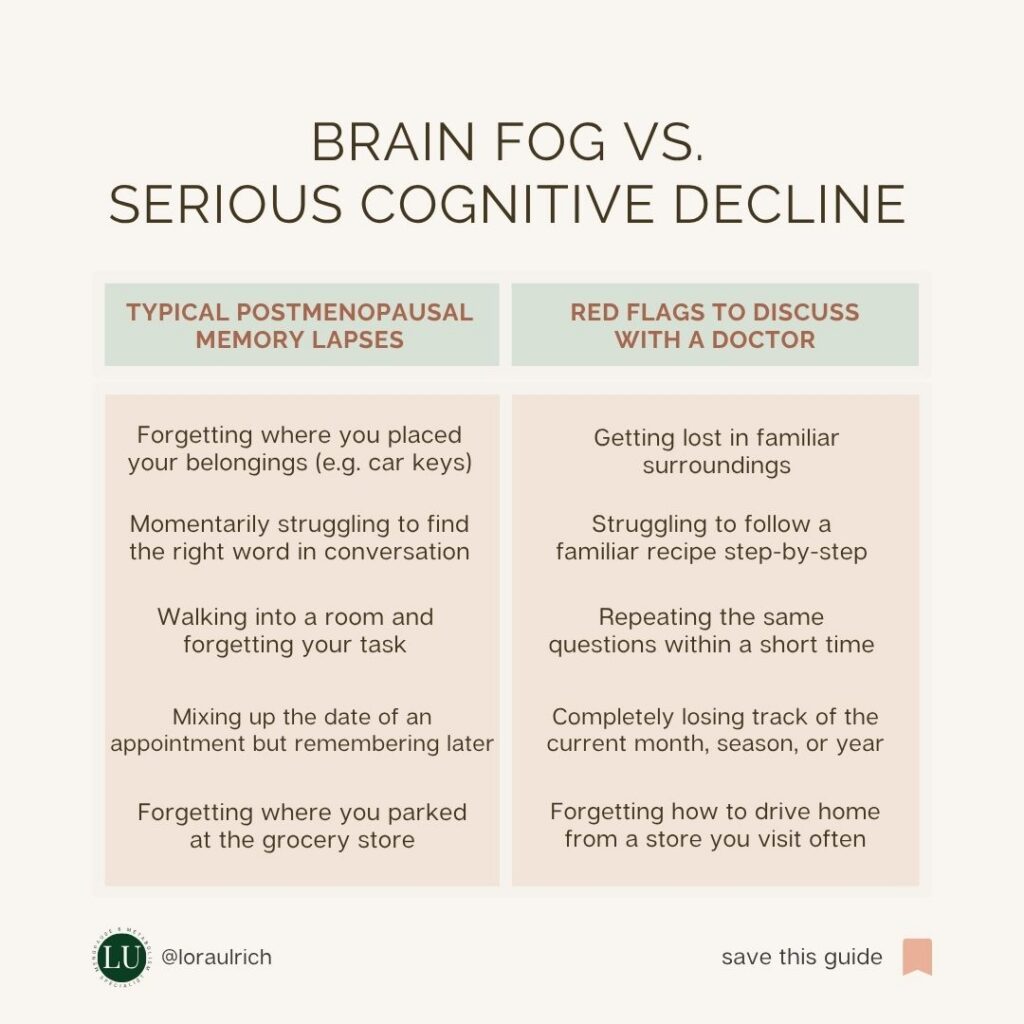
Brain Fog vs. Serious Cognitive Decline
It is normal to worry when your memory feels different than it used to. However, typical brain fog looks very different from medical conditions like dementia or Alzheimer’s.
Daily Steps to Support Your Brain Health
You do not have to sit back and accept mental sluggishness. Simple daily habits can boost mental clarity, sharpen your focus, and protect your memory over the long haul.
- Feed your brain with nutritious foods
Your brain requires quality fuel to function sharply. Build your meals around anti-inflammatory foods that support blood vessel health and brain cells. Focus on leafy greens, wild-caught fish rich in omega-3s, walnuts, berries, and extra virgin olive oil. If you need a quick breakfast idea, a midlife matcha smoothie gives your brain clean energy without the mid-day caffeine crash.
- Look for targeted hormone support
Because postmenopausal memory loss stems from changing hormone levels, supporting your body’s hormonal balance can make a difference. Plant-based phytoestrogens, like those found in soy and red clover, help mimic gentle estrogenic activity in the body.
Using EstroPro for hormone balance delivers a blend of soy and red clover isoflavones. It also includes flaxseed and licorice extract to support heart and bone health.
- Prioritize deep, restorative sleep
Sleep is when our brain cleanses out cellular waste and solidifies the day’s memories. Create a restful evening routine by keeping your bedroom cool, limiting screen exposure an hour before bed, and keeping a steady sleep schedule.
- Challenge your brain and move your body
Physical activity increases circulation, carrying fresh oxygen and nutrients straight to your brain cells. Aim for regular walks, strength sessions, or swimming. Pair physical movement with mental exercise: pick up a new hobby, read engaging books, or learn a new language to build new neural pathways. If you want one-on-one guidance to address your specific symptoms, personalized menopause health coaching can help you create a plan tailored to your body and lifestyle.
Never Miss a Post on Hormonal Health and Healthy Midlife
Join my newsletter to get direct access to my weekly hormone insights, daily strategies, and metabolism-friendly recipes that fit right into your midlife years.
FAQs
Is postmenopausal memory loss permanent?
Memory lapses aren’t necessarily permanent, but they don’t simply disappear on their own either. Low estrogen directly impacts how your brain processes and retrieves information. While sleep and diet build a strong foundation, targeted hormone-support supplements like EstroPro help bridge the gap to keep your mind responsive.
How do I know if my memory lapse is improving or getting worse?
Track small daily markers rather than big moments: notice how quickly you recall names, how often you lose your train of thought in conversation, and your midday mental stamina. As your body adapts to consistent daily support, these micro-lapses become far less frequent.
When should I speak to a doctor about memory changes?
If memory lapses begin interfering with your ability to perform daily tasks, drive safely, or manage personal affairs, schedule an evaluation with a healthcare professional to rule out other medical causes.






+ show Comments
- Hide Comments
add a comment