


Dealing with stiff, achy joints can make daily life feel like a chore. As a menopause health coach, I help midlife women navigate the full spectrum of hormonal changes. In this blog, we will look at how the right perimenopause joint pain supplement can help restore your mobility and support your body’s foundational health during this transition.
Which Joint Supplement Actually Works in Perimenopause?
Waking up with stiff fingers or achy knees shouldn’t be your new normal. Those small aches often build into a feeling that your body is tightening up, making it harder to stay active or even get through your daily to-do list. While many people often blame aging, these changes usually stem from hormonal shifts during perimenopause.
As estrogen levels fluctuate, your body may become less efficient at using essential minerals. This shift impacts the health of your connective tissues, ligaments, and bones. Finding a high-quality perimenopause joint pain supplement is about more than just masking the discomfort. It gives your body the building blocks it needs to maintain flexibility and strength.
The Role of Magnesium and Calcium in Joint Comfort
Magnesium is a powerhouse mineral for women in midlife. It acts as a natural muscle relaxant and powers over 300 different enzyme reactions in your body. When magnesium levels are low, muscles often stay tense and joints can feel restricted.
Most people today are actually consuming enough calcium, but they fall significantly short on magnesium and Vitamin D. Because a healthy body requires a 2:1 ratio of calcium to magnesium, taking a supplement that is too heavy on calcium can actually make that imbalance worse.
Taking a supplement with a 1:1 ratio helps bring your overall daily intake into that ideal 2:1 balance, ensuring calcium is deposited into your bones where it supports strength, rather than lingering in your soft tissues.
Why Vitamin D and Micro-Minerals Matter
A truly effective perimenopause joint pain supplement requires a team effort. Vitamin D is essential because it acts as the key that unlocks your body’s ability to absorb calcium. Beyond bone health, Vitamin D supports healthy immune function and mood regulation, which are often top priorities during perimenopause.
Small amounts of boron and silicon also play a massive role. Silicon lives in the active growth areas of your bone, providing essential stability to your connective tissues. Boron helps your body retain minerals by reducing the amount of calcium you lose through excretion.
Support Your Mobility with a Balanced Approach
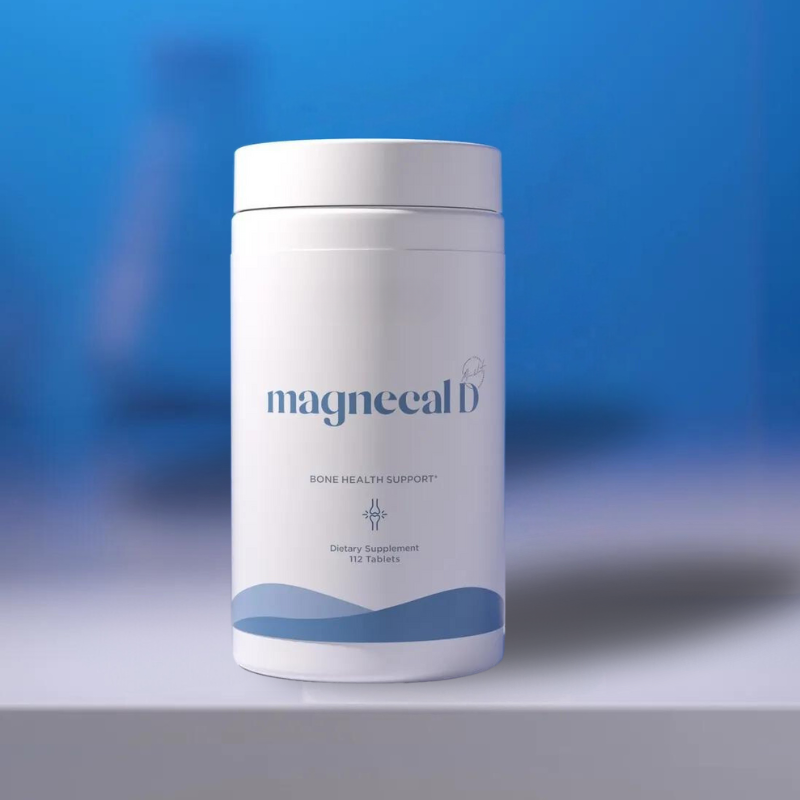
Your joint health depends on your internal mineral balance. Among the options available, my recommended joint pain supplement is MagneCal D, because it delivers the precise 1:1 ratio of magnesium and calcium your body needs to hit its daily targets. Because this formula also contains Vitamin D3, your bones and muscles can effectively absorb and use these minerals.
It is a simple addition to your routine that helps you maintain your flexibility and relieve that “heavy” feeling in your joints.
Still Unsure Which Step to Take?
Trying to guess which supplements or habits will actually help is exhausting. If you are overwhelmed by the options, it helps to have a second pair of eyes on your routines.
Book your Free Discovery Call
I want to help you get back moving without that constant stiffness holding you back. We can hop on a quick call to talk about your symptoms and see how to get you moving comfortably again. Grab a spot on my calendar:
FAQs
Why do my joints hurt more during perimenopause?
Estrogen has a protective effect on joints and reduces inflammation. As estrogen levels drop during perimenopause, inflammation can increase, and the connective tissues may become less elastic, leading to stiffness and pain.
Can I get these minerals from my diet alone?
While leafy greens, nuts, and seeds are great source of magnesium, many women find it difficult to consume enough to offset the rapid mineral loss that occurs during perimenopause. Taking supplements ensures you hit the optimal levels required for joint health every single day.
Can I just take more Calcium for my bones?
Calcium needs partners to work correctly. Without enough Magnesium and Vitamin D, your body can’t absorb calcium properly, and it may end up in your soft tissues instead of your bones. A balanced ratio is key.
Which perimenopause joint pain supplement should I start with?
While collagen, omega-3s, and turmeric all support joint comfort, my recommended perimenopause joint pain supplement is MagneCal D, because it helps restore mineral balance during hormonal shifts.
Hi, I’m Lora! Here’s How I Help Women Thrive in Midlife

If We Haven’t Met Yet
Hi! I’m Lora, a Certified Holistic Nutritionist, Metabolism Specialist, and Menopause Health Coach specializing in midlife metabolism.
I support women struggling with menopausal weight gain, unpredictable energy, and frustrating symptoms with practical tools, hormone-friendly nutrition, and lifestyle shifts that support sustainable results.






+ show Comments
- Hide Comments
add a comment